The One that Got Away

I know where I am, but I am not sure how I got here.

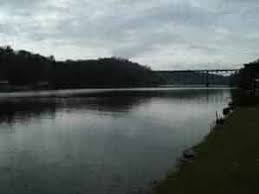
I am about a half-mile south of Mitchell Dam in Coosa County.  The bridge on Alabama 22 is half again as far away.  Nothing much on that highway but trees on either side.  Forests that would swallow it without a trace in a few years without human intervention.   You break down anywhere on that stretch between Rockford and Verbena and you better pray that you can flag down the occasional log truck, because your cell phone won’t have enough signal to be tracked by the government, let alone make a call.  But I can say that about most of Coosa County.  It is a good place for a person to simply disappear.  Many have.

I have stood on this spot before.  A narrow strip of Bermuda that is outrageously out of place, a little patch of grass that mimics a manicured subdivision lawn.  It is at the river’s edge.  A cabin is perched on the hillside up-slope.  The riverbank on this side of the Coosa is steep but gradual, and a few other cabins squat along the bank back toward the highway.  The one behind me was once a mobile home, but a skillful carpenter framed it in so that it looks like a cabin.  I know this because I tried to sell it for a man once, long ago.  An over-priced cabin with a secret.

The other side of the river is wild and beautiful.  A shear bluff 500 feet down to the waterline.  Limestone outcrops punctuate gnarled and stunted oaks and hickories, their branches heavy with Spanish moss that seems oddly out of place this far from the coast.

The current is swift here. Deceptively so.  The surface is gunmetal gray, but the roiling murky brown water hidden underneath swirls to the surface and then submerges again.

I watch this silently.  Try to read the river like an old manuscript.  In my mind’s eye I can see the Coosa when it ran wild before the dam.  Back when hundred-year floods sent sharecropper’s houses, barns, and livestock rolling past this spot toward the Gulf.

There are fish in this river.  Big fish.  Old men who sit out front of Kelly’s Crossroads store talk about catfish as big as Buicks below the dam, hovering silently in the murky depths.  Big blind yellow-cats that patrol the bottom at depths where no sunlight has ever penetrated.  Some will swear on a stack of Bibles that Alabama Power can’t hire divers to inspect the dam below the surface, because they know what’s down there.  They have heard the old stories of men who went down and never came back up.  About the one who made it back to the surface but spent the rest of his years wide-eyed and silent in a padded room up at the nervous hospital in Tuscaloosa. 

I suddenly realize that I am not alone.  I am standing next to a stranger.  He is casting into the depths with heavy tackle, long stout rod and spinning reel with 100-pound test line, the kind of rig you would see on a charter boat in the Gulf, or fishing for marlin in the Keys.

I watch him silently.  He casts upstream and lets the line run by with the current.  He doesn’t look at me.

“They’re running” he says.

I don’t recognize his accent, but it’s not one from around here.  His weathered face is partially hidden under a faded black Harley Davidson baseball cap.  A skull patch with “Live to Ride – Ride to Live” on the front.  Shirt sleeves rolled up above the elbows exposing tattoos of dark angels in hellish landscapes. 

“You ride?” I ask.  I’m looking for common ground.  “Maybe we can hook-up and ride to…”

He waves me off mid-sentence.

“Today we fish” he says.

In an instant I see something roll up through the surface.  Something big.  Great White shark big.  Flash of white belly in the twilight, the size and color of a beech log.  It is gone in the blink of an eye, slipping back silently below the current.

I wonder if he too saw, but he has turned away from me.  “Pick up that rig and cast upstream.  Let it float with the current.  Let her take it and run, then snatch that pole back with both hands to set the hook.  You best be ready when she hits it.”

I do as he says.  I see the bait plop through the surface and disappear.  I watch the line as it moves with the current and passes where I stand on the bank.  His line is still in the water, but he’s no longer watching it.  His is gaze has turned to me.

I feel the line tug.  Watch all the slack vanish and see the rod tip snap downward.

“Steady… steady… now. Snatch it!”

I feel every muscle in my body tense as I jerk the rod backwards with both hands.  The pull on the line is immovable.  I have hooked something so big that it is pulling me toward the murky water as it moves downstream.  In a millisecond I realize that I am the one who is hooked.  I am the one who is being played.  I am caught.  My mind screams “let go, let go,” but I cannot.

I turn to the man for help, but he is gone.  His voice is a whisper in my ear.  “You want to ride, son?  Let’s ride.  Now taste and see that the Lord is good.”

I begin to scream.

And then I wake up.
Once Upon a Time

Once Upon a Time

I find Twitter to be a waste of consciousness, but the Redhead still frequents it.  She does it with certain Sicilian tendencies: “keep your friends close and your enemies closer.”

Occasionally she will read aloud a post that I find interesting.

Last night she asked me “What was the first book you read that changed your life?  The Bible excluded.”

I thought some about that.  Looked at the ceiling.  Stared into space.  A couple of minutes went by.

“I didn’t mean it to be that serious of a question.”

But it was a very serious question, at least to me.  I have read a lot of good books.  But the first that changed my life?  I struggled to recall them all, working backward to childhood.

My first impulse was The Catcher in the Rye.  I read that one in twelfth grade at the urging of my rather eccentric English teacher Mrs. Hammonds.  It is a book that was (and still is) banned in many public schools.  It was on the RESTRICTED list in my school library, which meant it was behind the counter and my momma had to sign a permission slip for me to read it.

Thank God I have a good momma. 

And thank God she never read The Catcher in the Rye.

I can’t say that book changed my life, but it certainly changed my outlook on life.  I knew a lot of characters in that story, especially the narrator.

But I digress.  Read it yourself — but only if your momma allows it.

I knew there had to be a book before that one.  It took another ten minutes or so and I had my answer.

A Separate Peace by John Knowles.

“What?  I have never even heard of it.  Why?”

I had to admit that I did not recall much about the story, so many years later.  I do remember that it was about a young man who went to a war and came out a very different person.  He had to declare a “separate peace” – a peace with himself.

But that’s not how it changed my life.  It wasn’t the story per se, it was the type – the first “adult” book I remember reading.

If you were properly educated in the English language, you know that all the best childhood stories begin and end with two simple phrases:

“Once upon a time…”

and

“They lived happily ever after.”

There is beauty in that by design.  It is comforting when momma is about to put out the light and you are pretty sure there is a monster under your bed. 

But we soon come to realize that those stories aren’t representative of life in mortal flesh.  At least not the “happily ever after part.”

I had not forgotten how I came to read A Separate Peace.  Miss Klinner, my seventh-grade English teacher, gave our class the book as an assignment.  As incentive, she offered to give a copy to the first student who read it.  I got to keep mine two days later.  It is still in my personal library.  I can put my hands on it right now, with or without the mysterious electrical construct that is “The Cloud.”

Perhaps it was not the book that changed my life so much as it was the teacher.  She taught me the nuts and bolts of a complicated language through diagrammed sentences and conjugated verbs, but she also showed me how to love and appreciate the never-ending pleasure of reading good books.

I have always loved her for that, as I continue to love the written word that imitates life.

And that may be about as close to as “happily ever after” as a man can get.


 [BC1]

Easter Parade

In your Easter bonnet
With all the frills upon it
You’ll be the grandest lady
In the Easter parade

I’ll be all in clover
And when they look you over
I’ll be the proudest fellow
In the Easter parade

We were at the light.  Thirty-five miles away from the church where we would hear the Easter story yet again.

Maybe I should have been thinking holy thoughts on a holy day.  But I wasn’t.  My mind is always in perpetual stream-of-consciousness.  I don’t think that’s “normal,” but then again, it’s the only mind I’ve got, so I don’t know.  I often think I would like to try someone else’s brain for a bit.  Just to see.

What I was thinking at that moment was that I had become complacent.  That I no longer pay attention to life.  Don’t notice that things are going on all around me anymore.  That’s suicide if you write.

She got out on the passenger side and walked in front of the truck.  She didn’t look back.  Started walking back toward town.  Expressionless.

She was wearing white jeans and platform heels.  Blue blouse.  Looked straight out of the ‘70’s.  Out of the every-day fashion then, at least.  Not out of church fashion.  Ladies wore their finery to church in those days.  Pretty spring dresses and hats.  I miss those hats.

But she was dressed for today’s church.  The church that more than half of America doesn’t attend.

I couldn’t help thinking how important it is to always wear comfortable shoes.  Never know when you’ll have to get out and walk away from your family on Easter Sunday.

“I reckon she’s had enough” I say.

“Yep” replied the Redhead.

That’s a benefit of living with someone for nearly forty years.  Economy of words.  Hemingway on steroids.

The man was comical in a dark sort of way.  Looked straight ahead.  Like nothing had just happened.

I look for kids.  Please God, let there be no children in this Easter drama.

“What did you get for Easter? “

“Well I got a chocolate bunny and some colored eggs and mommy jumped out of the truck on the way to church.”

Easter isn’t what it used to be.  But nothing else is either. 

Have you noticed?

Needful Things

dry garden

Steps slow and measured.  Bare feet in the furrow, wisps of chalky dust trailing.  Tomorrow’s dew will settle the powder, but only until the sun peels the ridgetop. Until then a visage of singular puffs, the prints fossilized afarensis along some ancient Saharan riverbed.

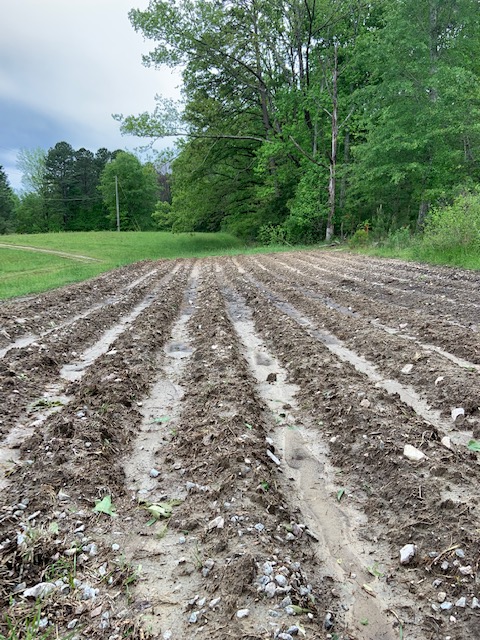
The rows 36 apart, predestined and foreordained by the plow.  The seed carefully placed one to a finger-shaped hole. One to two inches deep, three to six between.  Covered by a little pat, the tenderness almost sentimental, usually reserved for the head of a good dog or a beloved grandchild.

Heart of a poet, not a farmer.

Daybreak after planting, the sky cracked-open.  Four inches in a matter of a few hours.  I stood in the midst and watched, a visage of some forlorn and demented scarecrow in a sea of swirling black feathers.  Sweat-soaked in the eve, rain-soaked in the morn.

The rows held fast, anchored to the earth by some unseen force.  Perhaps or perchance through a shaman’s trance, lips moving inaudible prayers or curses into a turbulent sky.

A week passed.  Two weeks.  Now three.

The sky sealed by a celestial signet.  Heat building each day, stacked like strata viewed bottom-up.

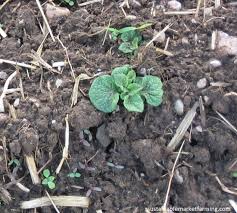
Such tender shoots.  Promises of ears, pods, and succulents.  Colors not green but off-green, wilting and folding inward like ancient scrolls exposed after centuries of desiccation.

Tomorrow dawn I stretch the hose.  Waters of survival only, creating a mirage of an oasis.  Temporal relief.  Water from pipes stave-off, but they do not nourish.  Treated is for human, rain for plants.

Sunday morning shower, rinse, repeat.

Odds makers book Monday at six in ten, but never wager against the home team, especially in Alabama.

I look heavenward and wait, my nursery of babes waiting to be suckled.

The Good Life

for Molly

garden

If you live long enough you gain an appreciation for those who came before you.

When COVID-19 hit and everyone was advised to practice “social distancing,” I was indifferent. “Social distancing?” I invented it. Been practicing it for years.

Then came “shelter in place” and “work from home.”

Unlike most, I could not have been happier. Stay home? Well “please don’t throw me in the briar patch Br’er Fox.”  I packed my possibles and headed to our farm.

I take liberties with the word “farm.”  Not the image the word conjures. Really just woods and a few open acres. The crops are trees and wildlife, not corn and livestock.

Finally, a chance for the good life. The life of my ancestors. A life for which I was surely born.

Now to be clear, I do not have an upper-class pedigree. I did the research. My kin were Irish immigrants and poor white sharecroppers. No royal sap in the family tree. Mostly poor folks who eked out a living with whatever they had on hand.

But I had more.  The pandemic did not take me by surprise. The farmhouse was fully stocked before the initial panic hit. While many rushed to the stores, I just sat back and watched from a distance. I am, after all, a smart man (just ask the Redhead and she will tell you “oh yes, he certainly thinks he’s a smart man”). I am forward-looking. A visionary even. I was never a Boy Scout, but I lived their motto — “Be prepared.”

I had food. I had medicine. I had gas and diesel. Masks, antibacterial wipes, and toilet paper to spare.

I might have even had a gun or two.

I also had creeks for water, trees for firewood, and wild animals for meat.

But most importantly of all, I had seeds for a garden.

I was dug-in like an Alabama tick. Ready for the long haul.

The first three weeks were blissful. I was finally able to get my work done. Almost no calls, no emails, and no visits from anyone to break my chain of thought.

My plan was executed to perfection. I put in my office hours, then headed outside to take leisurely walks and tend my tomato plants.

On a gorgeous Saturday morning I climbed aboard the big John Deere and plowed and planted my garden. It was the same kind of worn-out rocky ground that my ancestors plowed with mules, but no matter.  I could coax that sorry dirt to yield more than they ever dared to dream.

Then came Sunday morning. The storms hit at sunrise. Hail. High winds. Rain by the bucket-load. The lights flickered, then went out.

No worries. I had candles and flashlights with extra batteries. Who needs television or the internet? I had shelves of good books and plenty of paper and pens with which to write.

Paradise.

That night I laid down in sweet solitude. The bedroom windows were open, and the light breeze and the dripping rain the only sounds. My sleep was deep and filled with contented, peaceful dreams.

Monday morning, I decided to take a stroll to survey my kingdom.

Trees down. Trails blocked.  Garden mostly washed away. Creeks out of the banks. Dead battery on the Deere.

Rugged independence? Gone.

That night I blew out the candles and lay in the darkness again. You know you really cannot appreciate true darkness until you are way back in the woods with no lights on a cloudy night. I struggled to find sleep with my troubled thoughts.

As my mind raced through the stillness of that long night it finally hit me. There was nothing romantic about the way my ancestors lived. They could not run to the grocery store when the crops washed away. No cash to buy more seed or supplies or even pay back their shares. No hiding from a pandemic. If the Spanish flu did not kill their children, then cholera just might.

I understand them now. Why they left the “good life” for jobs in the cotton mill towns. Why they traded idyllic farm living for a hot, dusty job where a man might lose a hand in a second or his lungs to the lint in a matter of a few years.

I have no worries. I can start again. I have the means to replant the garden, and the grocery store is only five miles away. I still have my masks and wipes, so I will probably stay untouched by the virus, at least for a while.

I added something to my supplies. Respect for my ancestors.

The “good life” is all high cotton and buttermilk cornbread when you are playing a role in the theater of your mind.  But when you live off the land to survive it is not all it is cracked-up to be.