Stone Blue

For Ellen

A long time ago when my youngest son was around 14 years old, a tragedy happened in our community.  A girl, too young to have a driver’s license, borrowed her parents’ car keys for a joy ride.  She picked up four friends who slipped out of their homes and sped away into an Alabama summer night.  Wild and free, the yearning of a teenaged heart and the fear in every parent’s.

The drive ended on a stretch of blacktop where the road just seems to fall away.  I imagine they were looking for that feeling, the one you get at the top of the rollercoaster just before you drop into the abyss, but they never made it.  The car left the road at the crest of the hill and smashed through the trees on the side slope.  Two little girls were killed. One of them was my son’s classmate.

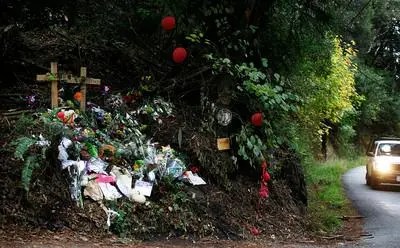
There was an outpouring of community grief, especially at the school.  Soon a little memorial appeared on the shoulder where the car left the road.  Flowers. Photos.  Little handmade crosses.  A place where classmates gathered to cry and leave notes to their friend on colorful scraps of paper.

A few days after I drove my son past the crash site.

And then I said a hard thing.

“It’s nice that the girls are still crying and you’ll have made this for your classmate.  The emotions are all fresh and raw and it seems like she will never be forgotten.  But the truth is, all this stuff will be gone in six months.  In a few years you’ll have a hard time remembering what she looked like, and not long after that you won’t remember her at all unless someone mentions her name.  You will never totally forget, but you won’t really remember, either.”

It was a blunt and maybe too soon, but I tried to teach my sons the hard truths of life early — what was coming as they grew into men.  In this instance about how life goes on after tragedy, transcending the moment.

I knew this from experience.

I think she was a couple of years younger than me.  Shoulder-length auburn hair and skin covered with freckles.  What I call “country-girl pretty.”  Jeans and t-shirt pretty.  Long, lanky, athletic.  A girl you would pick first on a cool October Friday night when a scratch game of coed touch football broke out on the church lawn.  Or ask to the Spring dance if you had the courage.

She liked good music.  What’s called “classic rock” today was the soundtrack of our lives then.  When most of the girls were Bee Gees and Barry Manilow, she was Zeplin and Skynyrd.  I thought that was cool.    

She liked a group called Foghat.  Especially a song not heard today because it wasn’t a big hit.  But it got some airtime in ’78, and I remember some of the lyrics:

Wind tearin’ through the backstreet, I hear the rhythm of my heartbeat
Rain blowin’ in my face, I’m tired of being in the wrong place
Turn up the radio higher and higher, rock and roll music set my ears on fire

When I was stone blue, rock and roll sure helped me through

She died one rainy Friday night when a drunk swerved across the center line and hit her car head-on.  Her friend in the passenger seat survived, but it was touch and go for a while.  Some called it a miracle.

I heard the news, but I had been away at college for a while.  I wasn’t there for the memorials and the grieving.  It was sad, but I was detached from it, and after a while most of my memories just faded away.

The song lived on.  Whenever I have heard it over the years it brings back those scant memories.  I think of the lyrical irony.  In my mind’s eye I see her tearing down that rainy highway, heart beating wild and free.  Foghat in the 8-track, volume cranked-up higher and higher.

Mostly I think about her being in the wrong place.

My memory is stone blue, and I wonder if it is so neglected and faded that the details are no longer accurate.  So much time has passed.

When the song ends life goes on, transcending the moment.  I never totally forget, but I don’t really remember, either.
The One that Got Away

I know where I am, but I am not sure how I got here.

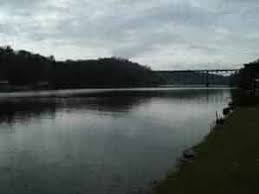
I am about a half-mile south of Mitchell Dam in Coosa County.  The bridge on Alabama 22 is half again as far away.  Nothing much on that highway but trees on either side.  Forests that would swallow it without a trace in a few years without human intervention.   You break down anywhere on that stretch between Rockford and Verbena and you better pray that you can flag down the occasional log truck, because your cell phone won’t have enough signal to be tracked by the government, let alone make a call.  But I can say that about most of Coosa County.  It is a good place for a person to simply disappear.  Many have.

I have stood on this spot before.  A narrow strip of Bermuda that is outrageously out of place, a little patch of grass that mimics a manicured subdivision lawn.  It is at the river’s edge.  A cabin is perched on the hillside up-slope.  The riverbank on this side of the Coosa is steep but gradual, and a few other cabins squat along the bank back toward the highway.  The one behind me was once a mobile home, but a skillful carpenter framed it in so that it looks like a cabin.  I know this because I tried to sell it for a man once, long ago.  An over-priced cabin with a secret.

The other side of the river is wild and beautiful.  A shear bluff 500 feet down to the waterline.  Limestone outcrops punctuate gnarled and stunted oaks and hickories, their branches heavy with Spanish moss that seems oddly out of place this far from the coast.

The current is swift here. Deceptively so.  The surface is gunmetal gray, but the roiling murky brown water hidden underneath swirls to the surface and then submerges again.

I watch this silently.  Try to read the river like an old manuscript.  In my mind’s eye I can see the Coosa when it ran wild before the dam.  Back when hundred-year floods sent sharecropper’s houses, barns, and livestock rolling past this spot toward the Gulf.

There are fish in this river.  Big fish.  Old men who sit out front of Kelly’s Crossroads store talk about catfish as big as Buicks below the dam, hovering silently in the murky depths.  Big blind yellow-cats that patrol the bottom at depths where no sunlight has ever penetrated.  Some will swear on a stack of Bibles that Alabama Power can’t hire divers to inspect the dam below the surface, because they know what’s down there.  They have heard the old stories of men who went down and never came back up.  About the one who made it back to the surface but spent the rest of his years wide-eyed and silent in a padded room up at the nervous hospital in Tuscaloosa. 

I suddenly realize that I am not alone.  I am standing next to a stranger.  He is casting into the depths with heavy tackle, long stout rod and spinning reel with 100-pound test line, the kind of rig you would see on a charter boat in the Gulf, or fishing for marlin in the Keys.

I watch him silently.  He casts upstream and lets the line run by with the current.  He doesn’t look at me.

“They’re running” he says.

I don’t recognize his accent, but it’s not one from around here.  His weathered face is partially hidden under a faded black Harley Davidson baseball cap.  A skull patch with “Live to Ride – Ride to Live” on the front.  Shirt sleeves rolled up above the elbows exposing tattoos of dark angels in hellish landscapes. 

“You ride?” I ask.  I’m looking for common ground.  “Maybe we can hook-up and ride to…”

He waves me off mid-sentence.

“Today we fish” he says.

In an instant I see something roll up through the surface.  Something big.  Great White shark big.  Flash of white belly in the twilight, the size and color of a beech log.  It is gone in the blink of an eye, slipping back silently below the current.

I wonder if he too saw, but he has turned away from me.  “Pick up that rig and cast upstream.  Let it float with the current.  Let her take it and run, then snatch that pole back with both hands to set the hook.  You best be ready when she hits it.”

I do as he says.  I see the bait plop through the surface and disappear.  I watch the line as it moves with the current and passes where I stand on the bank.  His line is still in the water, but he’s no longer watching it.  His is gaze has turned to me.

I feel the line tug.  Watch all the slack vanish and see the rod tip snap downward.

“Steady… steady… now. Snatch it!”

I feel every muscle in my body tense as I jerk the rod backwards with both hands.  The pull on the line is immovable.  I have hooked something so big that it is pulling me toward the murky water as it moves downstream.  In a millisecond I realize that I am the one who is hooked.  I am the one who is being played.  I am caught.  My mind screams “let go, let go,” but I cannot.

I turn to the man for help, but he is gone.  His voice is a whisper in my ear.  “You want to ride, son?  Let’s ride.  Now taste and see that the Lord is good.”

I begin to scream.

And then I wake up.

Once Upon a Time

Once Upon a Time

I find Twitter to be a waste of consciousness, but the Redhead still frequents it.  She does it with certain Sicilian tendencies: “keep your friends close and your enemies closer.”

Occasionally she will read aloud a post that I find interesting.

Last night she asked me “What was the first book you read that changed your life?  The Bible excluded.”

I thought some about that.  Looked at the ceiling.  Stared into space.  A couple of minutes went by.

“I didn’t mean it to be that serious of a question.”

But it was a very serious question, at least to me.  I have read a lot of good books.  But the first that changed my life?  I struggled to recall them all, working backward to childhood.

My first impulse was The Catcher in the Rye.  I read that one in twelfth grade at the urging of my rather eccentric English teacher Mrs. Hammonds.  It is a book that was (and still is) banned in many public schools.  It was on the RESTRICTED list in my school library, which meant it was behind the counter and my momma had to sign a permission slip for me to read it.

Thank God I have a good momma. 

And thank God she never read The Catcher in the Rye.

I can’t say that book changed my life, but it certainly changed my outlook on life.  I knew a lot of characters in that story, especially the narrator.

But I digress.  Read it yourself — but only if your momma allows it.

I knew there had to be a book before that one.  It took another ten minutes or so and I had my answer.

A Separate Peace by John Knowles.

“What?  I have never even heard of it.  Why?”

I had to admit that I did not recall much about the story, so many years later.  I do remember that it was about a young man who went to a war and came out a very different person.  He had to declare a “separate peace” – a peace with himself.

But that’s not how it changed my life.  It wasn’t the story per se, it was the type – the first “adult” book I remember reading.

If you were properly educated in the English language, you know that all the best childhood stories begin and end with two simple phrases:

“Once upon a time…”

and

“They lived happily ever after.”

There is beauty in that by design.  It is comforting when momma is about to put out the light and you are pretty sure there is a monster under your bed. 

But we soon come to realize that those stories aren’t representative of life in mortal flesh.  At least not the “happily ever after part.”

I had not forgotten how I came to read A Separate Peace.  Miss Klinner, my seventh-grade English teacher, gave our class the book as an assignment.  As incentive, she offered to give a copy to the first student who read it.  I got to keep mine two days later.  It is still in my personal library.  I can put my hands on it right now, with or without the mysterious electrical construct that is “The Cloud.”

Perhaps it was not the book that changed my life so much as it was the teacher.  She taught me the nuts and bolts of a complicated language through diagrammed sentences and conjugated verbs, but she also showed me how to love and appreciate the never-ending pleasure of reading good books.

I have always loved her for that, as I continue to love the written word that imitates life.

And that may be about as close to as “happily ever after” as a man can get.


 [BC1]

Easter Parade

In your Easter bonnet
With all the frills upon it
You’ll be the grandest lady
In the Easter parade

I’ll be all in clover
And when they look you over
I’ll be the proudest fellow
In the Easter parade

We were at the light.  Thirty-five miles away from the church where we would hear the Easter story yet again.

Maybe I should have been thinking holy thoughts on a holy day.  But I wasn’t.  My mind is always in perpetual stream-of-consciousness.  I don’t think that’s “normal,” but then again, it’s the only mind I’ve got, so I don’t know.  I often think I would like to try someone else’s brain for a bit.  Just to see.

What I was thinking at that moment was that I had become complacent.  That I no longer pay attention to life.  Don’t notice that things are going on all around me anymore.  That’s suicide if you write.

She got out on the passenger side and walked in front of the truck.  She didn’t look back.  Started walking back toward town.  Expressionless.

She was wearing white jeans and platform heels.  Blue blouse.  Looked straight out of the ‘70’s.  Out of the every-day fashion then, at least.  Not out of church fashion.  Ladies wore their finery to church in those days.  Pretty spring dresses and hats.  I miss those hats.

But she was dressed for today’s church.  The church that more than half of America doesn’t attend.

I couldn’t help thinking how important it is to always wear comfortable shoes.  Never know when you’ll have to get out and walk away from your family on Easter Sunday.

“I reckon she’s had enough” I say.

“Yep” replied the Redhead.

That’s a benefit of living with someone for nearly forty years.  Economy of words.  Hemingway on steroids.

The man was comical in a dark sort of way.  Looked straight ahead.  Like nothing had just happened.

I look for kids.  Please God, let there be no children in this Easter drama.

“What did you get for Easter? “

“Well I got a chocolate bunny and some colored eggs and mommy jumped out of the truck on the way to church.”

Easter isn’t what it used to be.  But nothing else is either. 

Have you noticed?

Needful Things

dry garden

Steps slow and measured.  Bare feet in the furrow, wisps of chalky dust trailing.  Tomorrow’s dew will settle the powder, but only until the sun peels the ridgetop. Until then a visage of singular puffs, the prints fossilized afarensis along some ancient Saharan riverbed.

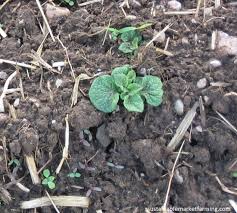
The rows 36 apart, predestined and foreordained by the plow.  The seed carefully placed one to a finger-shaped hole. One to two inches deep, three to six between.  Covered by a little pat, the tenderness almost sentimental, usually reserved for the head of a good dog or a beloved grandchild.

Heart of a poet, not a farmer.

Daybreak after planting, the sky cracked-open.  Four inches in a matter of a few hours.  I stood in the midst and watched, a visage of some forlorn and demented scarecrow in a sea of swirling black feathers.  Sweat-soaked in the eve, rain-soaked in the morn.

The rows held fast, anchored to the earth by some unseen force.  Perhaps or perchance through a shaman’s trance, lips moving inaudible prayers or curses into a turbulent sky.

A week passed.  Two weeks.  Now three.

The sky sealed by a celestial signet.  Heat building each day, stacked like strata viewed bottom-up.

Such tender shoots.  Promises of ears, pods, and succulents.  Colors not green but off-green, wilting and folding inward like ancient scrolls exposed after centuries of desiccation.

Tomorrow dawn I stretch the hose.  Waters of survival only, creating a mirage of an oasis.  Temporal relief.  Water from pipes stave-off, but they do not nourish.  Treated is for human, rain for plants.

Sunday morning shower, rinse, repeat.

Odds makers book Monday at six in ten, but never wager against the home team, especially in Alabama.

I look heavenward and wait, my nursery of babes waiting to be suckled.