A Walk through the Forest

I am a professional forester. Or at least I was for about 35 years. Now I am retired, which I suppose has reduced me to amateur status. This happened much earlier than expected, and not by choice. A couple of diseases from a tick bite changed my life, both personally and professionally.

Forestry was a decent way to make a living. I did not get rich, but I am not poor by any means. I met a lot of interesting people and walked through some of the most beautiful places in Alabama. A lot of my time was spent in solitude, which allowed contemplation. But most of the work required a certain amount of haste. Nothing leisurely about it. Not enough time for a sincere appreciation of the sheer wonder of it all. I regret that.

Now that I have more time, a visit to the woods is a rare treat — and almost never made alone.

One thing that has always amazed me is how little people know about forests and forestry. Alabamians especially. The state is about 70% forested, and the associated forest products industry is the second largest in terms of economic activity. But the majority can’t see the forest for the trees.

The Redhead asked me to tell you a little about it, probably so I won’t keep telling her about it. I suspect it will be a long tale, a mixture of fact and opinion. Some parts will hopefully be interesting. Others, maybe not so much. Just skip the boring parts and jump back in later.

I will give you the ending here, at the beginning. The forest landscape is about to undergo an epic change in the South. It will not be caused by any natural disaster, insect, disease, or plague. It will be diminished by a forest product called pulpwood.

Four: Storm

I am sitting in a grassy field under a small tent. A young nurse is taking my blood pressure. She is dressed in army fatigues, like one of the nurses from the old television show M*A*S*H. It is sunny and the light is very bright. She is talking to me, her voice muffled like we are under water. There are no other sounds. No birds singing, no traffic, no other voices. We are alone.

“We are going to get you to a room soon honey, okay?”

“My head hurts.”

And later:

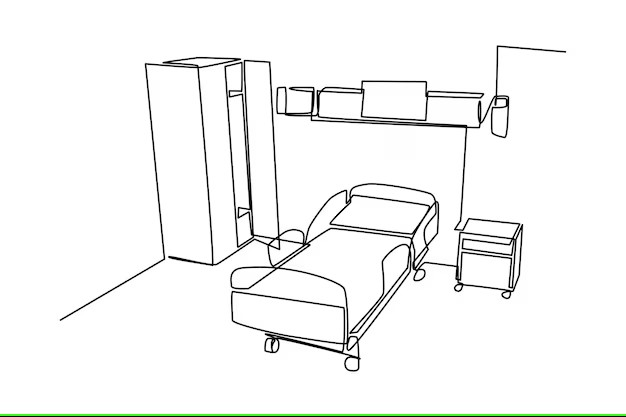
I am lying in a bed somewhere. My head feels as if it were in a vice. I hear my son’s voice.

How you feelin’ dad?”

“I don’t know what to do. They gave me all these COVID kits to put together, and the instructions are in Chinese. Can you help me figure it out?”

I would later learn that the first memory never happened. I was admitted to the hospital by standard procedure, through the emergency room.

The second did. My son found me babbling like that the next day. I had received no treatment up to that point. My fever had spiked to 103.

I remember almost nothing about what transpired in the week that followed. Most of what I write reconstructed from The Book. Other things were false (or no) memories that the Redhead explained in the days and weeks afterward.

No, family did come to see you, you talked to them. Yes, you did have your phone, but I did not see you look at it. Yes, you were awake a good bit of the time. Yes, we talked about a lot of things. No, they did bring you meals. Don’t you remember any of that?

I did not. I do not.

The Book has pages and pages of tests. Bizarre imbalances in blood profiles. Some categories were extremely low, others alarmingly high. There were also MRIs, CT scans, and ultrasounds.

They were looking for West Nile virus, but that test was negative. They considered meningitis, but never did a spinal tap (an error, given what was to come). The baffled internist bowed out and referred me to the “Infectious Disease Expert.”

After four days of intravenous antibiotics and fluids, the blood tests returned to normal.

A memory, confirmed to be true:

I am sitting in a chair and a doctor is speaking to me in a quiet voice.

“Mr. Clifton you have been an extremely sick man. We have done a lot of tests, but we do not know the cause. I suspect it may be related to the tick bite you had, but tick-borne infection tests must be sent to a lab in Virginia. It will be two weeks before the results come back. Until then, I am giving you a prescription for one week of Doxycycline just in case. By the way, I noticed from your chart that you haven’t had your COVID vaccine, and I really think you should consider…”

“No. I am not taking your shot. You should focus on figuring out what I have rather than trying to get me to take some so-called vaccine for something you think I may get.”

“Sir this is not a political thing, but…”

“No, it is not political. End of discussion.”

“Understood. I will call you when your lab results come in.”

Admittedly rude, that. It might have affected our future relationship.

The Redhead drove me home soon afterward, but to this day I do not remember the ride.

Two: The Book

The telling would not be possible without the book. A three-ring binder that serves as a sort of reference manual. Painstakingly assembled by the Redhead, a left-brained mathematical genius who can account for every penny on a balance sheet and has never met an equation she could not solve. Quite a catch for a right-brained word-man who can see the forest from the trees but cannot see the solution for the numbers.

The book is a chronological presentation of every medical visit, every test, every doctor’s summary, over the course of two years. There are spreadsheets she has constructed that compare blood test results by date for every component and how the numbers fluctuate – normal, abnormal, normal, abnormal – clues in search of a crime.

The analysis has been ignored or shrugged off by the medical community, most who seem to be more interested in moving things along so that they can get to the next beef in the slaughterhouse line. Let’s go folks, I have other patients to bill.

I offer this explanation to tell you how I know the order of events. Without the outline, the story is disjointed, the sequence and cadence lost. One of the effects of the illness has been a loss of short-term memory. Names and dates, mostly. I carry a little pocket-journal to help with that. Something a writer should do anyway. Stories and observations are often in the moment, and time blunts the imagery.

It is from this record that I know the exact date that this story began. How I can move from “Once upon a time” to June 5, 2021.

I had spent that week in the office, and a hot, lazy Saturday afternoon was just what the doctor ordered (no pun intended) for a forester and his dog. Just a short walk to a creek through a little patch of woods in Tallapoosa County, Alabama. The dog was protected from fleas and ticks. The forester, not.

An Independence Day

July 1, 2023.

My personal “Independence Day,” in a sense.

I am officially unemployed.

The Redhead is calling it “semi-retirement.”  A good phrase, but not entirely accurate. I am too young to draw my pennies and not well-off enough to quit work for a life of leisure.  My career in forestry has paid the bills, but I did not get rich from it by any stretch of the imagination.

I prefer the term “self-employed,” although I am not entirely sure what that will look like in the days ahead.

There is a story here beyond employment. One I am going to tell only because someone urged me to do so. It will be difficult writing for me because it is about me, and quite frankly there are more interesting things to write about.

It is not a tale to solicit either pity or advice, because I have had plenty of both over these last two years.

Think of it as a cautionary tale, especially if you spend time in the woods and fields of Alabama.  It is a story about chronic illness.

I will write this story as a serial, because it is much too long to hold your attention in one sitting.

It starts like this: “Once upon a time, a forester was bitten by a tick.”

The Old Man, the Chihuahua, and Jesus in the Woods

Back in my younger days I bought a tract of timber from an old man.

As a side note and for your education in the intricacies of forestry parlance, anyone associated with the timber business refers to a parcel of wooded land as a “tract,” as in “that’s a nice tract of wood.”  It is pronounced “track,” and I suspect a good many of them would spell it that way.

But I digress. Reckon I got off tract.

I had just moved a logger onto the tract when the owner drove up.  He was an old man dressed in old man work clothes:  khaki pants, matching khaki shirt, red and black plaid hunting jacket, and a cap with ear flaps.  Looked like he might have just stepped off the cover of a 1957 edition of Outdoor Life.  His car was also from the ’50’s, a Rambler I believe, and it was as neat as the creases on those khaki pants.  I initially thought “bless his heart, this poor fellow has come today because this land is dear to him.  He probably inherited it from his father, who managed to scrape up enough share-cropper dollars to buy it just before the Great Depression.  Now he wants to take a last look at the trees he and his poor old daddy planted together right after he got home from the Big War across pond.”

I would later discover that he owned a couple of thousand acres of land and had more money than Carter had little pills (Google it, youngsters).  I have more imagination than sense sometimes.

He motioned me over to the passenger window.  “Hop in, young fellow, I want to show you some things before you get started.”

Now at this point in the story I should mention that there was a chihuahua in the back seat of the Rambler, who looked to be about as old as the man (in dog years, of course).  I should also mention that he was in a rage, barking and snarling and flinging himself against the rear passenger window.

I am not a person who has any fear of dogs.  But I do have a healthy respect for a snarling one with a murderous look in his bugged-out eyes, even if he does weigh 15 pounds and barks with a Mexican accent.

I hesitated.  “Is your dog going to bite me?”

“No, son, get in.  Jasper, hush that up now, you hear.”

Jasper was apparently bilingual, as he did calm down slightly.  But as soon as I got in he jumped to the top of the front seat, where he hunkered-down facing me.

We rode around in that Rambler for twenty minutes as the old man pointed to this and that.  We bounced down roads and pig-trails that I wouldn’t have attempted in a four-wheel drive pickup.

I said “Yes sir” a lot, but my eyes were straight ahead and I was trying not to flinch.  That chihuahua’s nose was one-inch from my cheek, and he was growling the entire time — one of those breathing, inhale/exhale growls.  I knew if I made one move my left ear was gone.  I was focused.

We eventually made it back, my face still intact.

The next day I called the logger to see how things were going.  “This is some good wood” (more forestry parlance), “but I’m afraid we’re going to accidentally kill that old man.  He stays out here all the time watching us work.  We’ve had several close calls.  He just appears out of thin air beside the machines.  I almost cut a tree down on him this morning.”

I promised I would come by the next morning and talk to him about the dangers of logging equipment.  Make sure he understood.

Let me digress again and tell you a little about this logger.  Tony had found Jesus at a Pentecostal tent revival a couple of months before, and he was as excited and sincere about his new-found faith as any man I had ever met.  Within a week, his entire crew had joined the flock as a result of his preaching.  Tony had invited me to his church, the “West Georgia Assembly of Signs Following,” where the Spirit was working.  People were speaking in unknown tongues, being healed of various afflictions, and sometimes were “Slain in the Spirit.”  No timber rattlers were being passed around, so I guess all the signs following were not yet on display.*

Once Tony asked me if I had ever been Slain in the Spirit.

I said I didn’t think I had.

“Well, you ought to come to one of our Saturday night services.  It happened to me a couple of weeks ago.  It was like being hit by a bolt of lightning.  Knocked me slam out of my shoes.”

I smiled and nodded.  Didn’t say anything.  Never had any desire to be struck by lightning.  Try to avoid it most days.

Back to the story.  The next day I came out to talk to the old man, but he was nowhere to be found.

I stopped Tony and asked if he had been out to the job that morning.

“Oh yes, he left about an hour ago.  I asked him if he knew Jesus, and he said ‘No, I don’t want any part of religion,’ so I radioed all my men and got them to come in.  We formed a circle around him and prayed for his eyes to be opened by the Spirit, but he just jumped in his car and left.”

Funny thing, we never saw that old man again.

Probably just afraid of lightning.


* The Bible, Mark 16:17-18.

This piece first posted in 2016.