Seven: Stumbling Through the Dark

When we last left this story, I had experienced some unusual symptoms six months after hospitalization for “suspected tick-borne illnesses.” The most serious were chronic fatigue, neuropathy in my hands and feet, loss of balance and difficulty walking.

Over the next year I would make multiple visits to my general practitioner (GP), a rheumatologist, a neurologist, a podiatrist, an immunologist, a Lyme Literate Medical Doctor (LLMD), and a “naturopath.”

For the sake of brevity, I will mention some common themes in this exasperating journey.

In my first visit to the GP, I explained my symptoms and asked if they might be related to Lyme Disease. His response was “There aren’t many cases of Lyme in Alabama.”

He ran some blood tests that revealed abnormalities, particularly a high Rheumatoid Factor (RF) which indicated inflammation. He suggested I was experiencing the onset of Rheumatoid arthritis and referred me to a local rheumatologist. I waited six weeks for the appointment.

I met with the rheumatologist and recounted my story about my declining health since my hospitalization for Lyme.

Had I been to Maine or Vermont? If not, it could not be Lyme-related because there was no Lyme Disease in Alabama.

My examination was a quick look at my hands. “You do not have arthritis. You should see a neurologist.”

I went back to the GP (a four-week wait). He took more blood and called the next day. I needed to come back in immediately. My blood protein levels indicated my kidneys might be failing.

The re-test was “normal.”

He referred me to the local neurologist. The first available appointment was in four months.

My son had recently seen a neurologist in another town. She was accepting new patients, so I called the GP and had the referral changed, and in two weeks I was in her office.

I explained the situation once again.

“Your symptoms are typically associated with diabetes, alcoholism, chemotherapy, heavy metal toxicity and some rare autoimmune diseases. Lyme disease is also on the list of potential causes, but there is no Lyme Disease in Alabama.”

She sent me down the hall to get an Electromyography (EMG) test. It would show I had bilateral peripheral neuropathy (carpal tunnel in both hands and tarsal tunnel in both feet). My nerves were not sending or receiving signals.

She suggested wrist splints, orthotics, and physical therapy. I objected. I wanted to know the cause. Carpal and tarsal tunnel syndrome repetitive motion injuries. And why both sides of my body? She ordered more blood tests.

A week later her nurse called. I had an abnormally high RF. She recommended I see a rheumatologist.

I made another appointment with the GP. Armed with The Book, the Redhead asked if there was any significance to consistently low globulin levels in all my blood tests. “Isn’t globulin related to the immune system?” He insisted that it was probably not relevant but that he would refer me to an immunologist.

I waited three weeks for that appointment. He ordered another blood test. He called two days later to ask me to come back for consultation.

My test indicated I had no immunity to respiratory infections. He could give me infusions to raise the levels of Immunoglobulin (Ig), but my insurance would not cover the costs ($5K) since I had no history of respiratory infections. He did not think my immune system problem had anything to do with my neurological symptoms, and even if they did the infusions would not be strong enough to help.

I then made an appointment with a “Lyme Literate Medical Doctor (LLMD).” These doctors fly “under the radar” because Lyme Disease is so controversial in the medical community. They do not advertise nor accept insurance (I will have more to say on this in a future post).

He examined me and told me my hospital treatment was insufficient. I had neurological Lyme and should expect to be on antibiotics for a minimum of six months. He ordered the “Western Blot Test” (which has less than 50% accuracy) and said he would contact me with the results.

He sent an email two weeks later. The test results were negative. He suggested that I see another doctor. He did not respond to further calls or emails.

At the urging of a friend, I went to see a naturopath. He asked about my history and symptoms and had me place my fingertips on a metallic disk. He explained that he could detect microbes and toxins that other doctors could not through electric currents that flowed across the skin. A few minutes later his computer spit out a report indicating I had a host of problems including an unhealthy digestive, Lyme Disease, heavy metal toxicity, and pesticide exposure.

He was also something of a bad fortune-teller. He foresaw me buying $750 worth of supplements to combat these illnesses from his store.

I made one last appeal to the GP. I asked to be referred to a neurologist at a research hospital.

Six weeks later I got a call from Emory University in Atlanta. The first available appointment was in January of 2024. After some groveling and begging my name was placed on a “cancellation list.”

A week later I got a call. “Can you be here tomorrow at 8:00?”

Finally, I was going to get some answers.

Six: The Descent

I reluctantly began this story several weeks ago here due to the urging of others. It is difficult because it is personal, and I have always guarded such things. If we met on the street today and you asked me how I was doing I would say “Pretty good” or “Fine, thanks.”

I continue the tale with the hope that it might be helpful to someone.

The next part of the story may seem incredulous. Let me frame it this way:

Have you ever gone for a time, say six months, and one day tried to put on a pair of jeans only to discover that they are too tight? You ask yourself, “Have I put on some weight?” You step on the scales and find that you have gained ten pounds. Your first thought is “How did that happen?”

The answer is gradually. My progression into chronic illness was the same.

In the weeks following hospitalization, I experienced some tingling and numbness in my feet. I began to stumble a little, and my gait became unsteady. Walking up or down stairs and on uneven surfaces became challenging. I would lose my balance but “catch” myself on a wall or a chair. It was not a matter of vertigo or “light headedness.”  It was strictly mechanical. It was hard to walk a straight line.

I also lost a lot of weight. Most of it was muscle. The clothes in my closet (my sizes had not changed since my twenties) were now way too large. Clown clothes.

I rationalized that these two conditions were linked. I was simply “out-of-shape.” Muscle atrophy from inactivity had affected my mobility, and I could get back to normal with disciplined exercise. I started lifting weights and felt better immediately, but after a few workouts I experienced complete fatigue. Though it was difficult to get out of bed, I had responsibilities — my family, my church, and my employer. I stopped and re-started the workouts several times, but the results were always the same.

Sometime later the Redhead and I were watching television one evening. She asked, “Why do you keep rubbing your hands?” I realized they too were numb. I really had not noticed before that moment because of the issues with my feet.

The numbness gradually worsened. Both hands and feet were numb during the day and throbbed at night. The Redhead told me I was “moaning” in my sleep.

Still, I let some time go by. Surely all this was simply connected to the Specialist’s “post viral syndrome” diagnosis.

Then I began to experience something the medical community calls “brain fog.” I lost track of things. Wallet. Phone. Keys. Forgot the names of people I had known for a long time. Stopped in mid-sentence because I could not remember a word.

I finally started to worry. I had waited long enough, and I had to find another doctor soon.

Thus began my search for answers in the modern medical system. It would drag on for over a year.

Five: Diagnosis

This is part five of a series. If you are a new reader, you may want to start here and read from the beginning.

Two weeks can be a long time when you are waiting for test results.

I spent a lot of that time on the internet, researching Lyme Disease. I began with studies and recommended treatments from research institutions like Mayo Clinic, then worked my way through page after page of personal stories.

Lyme was controversial. Most medical sources maintained that it could be successfully treated and cured if diagnosed early, but there were huge differences in the meaning of the word “early.” There was even debate about the accuracy of the test (some said less than 50%) as well as the efficacy of various antibiotics and the length of time they should be administered. All the medical researchers agreed on one thing: 14 to 21 days was the minimum length of treatment. Some believed 30 days was best.

I had received eleven days of Doxycycline — four intravenous and seven orally. I had questions about that if the results were positive.

The day arrived and I met with the Infectious Disease expert. A surprise — I was positive for five illnesses: Lyme (Borrelia sp.), Rocky Mountain Spotted Fever (Rickettsia), HGE (Anaplasma phagocytophilum), HME (Ehrlichia chaffeensis) and Micro Pneumonia (M. pneumoniae).

The doctor said that he suspected Lyme all along, but that the high fever and brain swelling I had experienced was more consistent with Rocky Mountain Spotted Fever.

“That one is potentially fatal. Glad we caught it early.”

My thoughts, kept to myself:

Glad we caught it early? I lay ignored in your hospital for 24 hours with a high fever and did not get so much as Tylenol. If my son had not found me, I might have been dead.

You gave me a broad-spectrum antibiotic and ran some inconclusive tests. If the Redhead had not told you that about the tick, we would not be having this conversation. I would be just a patient you treated for a “fever of unknown origin.” 

I told him what I had read. I was concerned that my antibiotic treatment had not been long enough to kill the Lyme bacteria.

“Oh no. You had the standard treatment. I am quite sure we got it. I have treated Lyme before.”

I reminded him that I was a forester with a history of tick bites. Was it possible that I already had Lyme and the Rocky Mountain Spotted Fever only brought it to our attention?

“No, I do not think so. No worries. You should have no more issues.”

I would, however, experience a condition called “post viral fatigue syndrome.” I should expect to feel tired and just generally lousy for up to six months before I felt “normal” again. No cause for concern. I had been terribly ill, and my immune system had taken quite a shock. I should gradually begin to feel better if I rested and took care of myself.

Six months passed. I did not feel better. Some days I just wanted to stay in bed, but I waited.

After all, he was the expert.

Part Three: Stormfront

The following Monday I made the weekly hour’s drive to my employer’s headquarters for staff meeting and consultation with my coworkers. At that time, most of us were working from home, so Mondays were a chance to talk to a body in a body, even if was technically supposed to be from a “safe” distance. That had value for me. “ZOOM” was the name of a children’s program on Public Television when I was a kid. I wish it had stayed that way.

On the drive home I started to feel a little “off,” like I was coming down with something. Sluggish. A little feverish. You may recall from the previous post that this was June 2021, and COVID was beginning to make another run in Alabama. I imagine that anyone who had as much as a sniffle during those two years had the same thoughts that first went through my mind. What gatherings have I been to in the last week or so? Did that lady who sat beside me at church yesterday cough?

I took my temperature when I got home – 99.1.  Yes, I was getting sick.

I took a hot bath. As I toweled-off I made the discovery – an attached blacklegged (deer) tick. It was engouraged, so I knew that it had been there a while. I thought back. Must have been Saturday. I pulled it off and flushed it down the toilet.

Now, dear reader, I realize that you might not be the outdoors type. Perhaps you have never been bitten by a tick, and the whole idea that I could have acted in such a matter-of-fact manner seems incredulous.  But please remember that I am a forester. I had repeated that same process hundreds of times over the years. For those who work in the woods it is routine. Just an annoyance. Cost of doing business.

Tuesday morning. I felt worse. My head hurt a little and I was beginning to feel achy all over. So, I did what most folks do these days. Took my business down to one of the local “doc-in-a-box” franchises. There was a time when you could call your family doctor (now called your “Primary Care Physician”), but those days are gone. To do so now means two to four weeks unless there is a cancellation.

The routine at the corporate franchise is always the same.

“Have you been here before?”

Yes.

“What?”

I pulled my mask down to be heard. YES.

“Sir, please keep your mask on at all times. I will need you to fill out these six pages of medical history and consent forms. Sign or initial as indicated.”

But I did that last time I was here.

“We have updated our computer system. Oh, and I will need to make a copy of your driver’s license and insurance card. Also, your credit card for the copay.”

Thirty minutes later I made it behind the door to get my vitals checked and get the obligatory COVID test.

“You have a slight fever.”

Yes, that is why I am here.

“Go down to Room 2, second door on the right. The doctor will be in with you shortly.”

Several minutes later he entered.

“Good news, you do not have COVID. So, what brings you in to see us today?”

I have a slight fever and I do not feel well.

“Ah. Seasonal allergies. We have been seeing a lot of that these last couple of weeks.”

But I have not sneezed, coughed, or had as much as a sniffle.

“Well, that is probably coming. We caught it early. Stop by CVS and pick up some Mucinex D when you leave. I will have the nurse give you a steroid shot.”

Doc, I am sure this is not an allergy.

“Tell you what. We will draw some blood and see if everything looks okay. I will have the nurse call you back in if not. But I am quite sure you will feel better by tomorrow.”

I did not feel better tomorrow. I felt worse. Head and body. Like I was in the initial stages of the flu, but I still had no respiratory symptoms. My fever had crept to 100.

Wednesday, I went back. Same doctor.

“What brings you in to see us today?”

I saw you on Monday, remember? I have a fever and my headache is worse. My whole body aches.

“The steroid shot and the Mucinex didn’t seem to help?”

No. What about the bloodwork?

“Did we draw some blood? Let me check on that.”

A few minutes later he returned.

“You do have some elevated numbers here. Looks like you have some sort of infection. I am going to start you on a seven-day course of a broad-spectrum antibiotic.”

Doc, I do not know if this is relevant, but I should mention that I was bitten by a tick last weekend.

“I do not think so. Tick diseases are rare in Alabama. At your age it is more likely prostatitis. Go home and get some rest. Give the meds some time to work.”

Sunday, June 13. I go back again. My fever is holding at 100.5 and my headache is severe. Shut the door, close the curtains, turn out the light and get in bed migraine severe.

I got the same doctor. He ordered a chest X-ray.

I go back home and tell the Redhead that she needs to take me to the emergency room.

It will be one of the last things I remember over the course of the week ahead.

Two: The Book

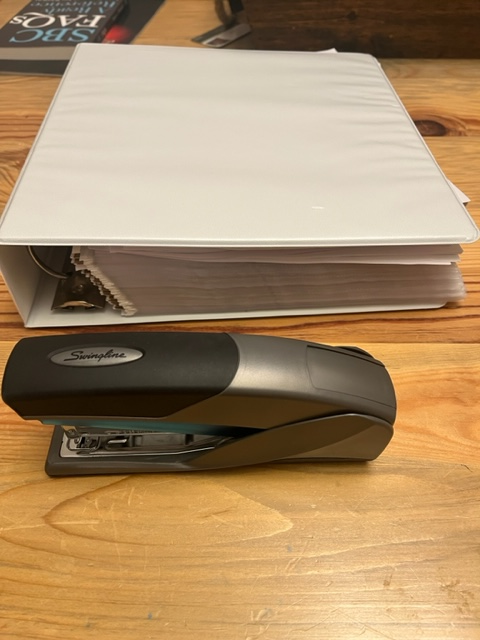
The telling would not be possible without the book. A three-ring binder that serves as a sort of reference manual. Painstakingly assembled by the Redhead, a left-brained mathematical genius who can account for every penny on a balance sheet and has never met an equation she could not solve. Quite a catch for a right-brained word-man who can see the forest from the trees but cannot see the solution for the numbers.

The book is a chronological presentation of every medical visit, every test, every doctor’s summary, over the course of two years. There are spreadsheets she has constructed that compare blood test results by date for every component and how the numbers fluctuate – normal, abnormal, normal, abnormal – clues in search of a crime.

The analysis has been ignored or shrugged off by the medical community, most who seem to be more interested in moving things along so that they can get to the next beef in the slaughterhouse line. Let’s go folks, I have other patients to bill.

I offer this explanation to tell you how I know the order of events. Without the outline, the story is disjointed, the sequence and cadence lost. One of the effects of the illness has been a loss of short-term memory. Names and dates, mostly. I carry a little pocket-journal to help with that. Something a writer should do anyway. Stories and observations are often in the moment, and time blunts the imagery.

It is from this record that I know the exact date that this story began. How I can move from “Once upon a time” to June 5, 2021.

I had spent that week in the office, and a hot, lazy Saturday afternoon was just what the doctor ordered (no pun intended) for a forester and his dog. Just a short walk to a creek through a little patch of woods in Tallapoosa County, Alabama. The dog was protected from fleas and ticks. The forester, not.