The Long Home

I wrote about Catherine and Buddy here several years ago. We were neighbors then, but the Redhead and I moved back to town shortly after I told you that little rose-colored glasses tale.

Over the last four years I have passed back and forth by their house many times. Last time I stopped was at the beginning of the pandemic. I dropped off a couple of N95 masks and told them to be careful if they went to town. Looked like there was going to be a bad virus going round, and they were saying it was going to be hard on old folks.

Since, one or both usually on the porch whenever I pass. They wave. I wave. Me always thinking I should stop and talk a minute, just check on them, but I never did. In a hurry. Felt too bad. Needed to get on home. Next time. Whatever excuse worked that day.

Shame passes quickly when you develop the knack. Still, I asked myself “What kind of person behaves this way?”

I never liked the answer. Still don’t.

Today Catherine is out by the mailbox. She flags me down, arms waving, as in ‘you need to stop, and you better stop now.’

“Buddy wants to see you. He’s got some questions he wants to ask you. Go on up. I’ll be up directly.”

He sits on the glider, as always. I shake his hand and move to the guest chair, diagonal from him about four feet away.

“Good to see you,” he says. “How you been lately?” He always says that.

“Not so good. I’ve been sick since I got bit by a tick a while back and –”

“Huh?” he says.

I try again, but it is obvious that he can’t hear me. I look to the yard for help, but Catherine is still dawdling by the Knockout Rose, which is gorgeous this year. I cross the porch and reposition myself in her chair to be at his ear.

He continues. “You heard any turkeys gobbling this year?”

“No, I haven’t been down here at sunrise in a while. You know I can’t get around in the woods like I used to since I’ve been sick, so I didn’t go at all this year.”

“Huh?” he says. Didn’t hear a word of it.

“Used to be a lot of turkeys around here, but not no more. Last time I saw a turkey gobbler was four, maybe five years ago. I come to the door one morning and there was one standing at the far end of the yard. He was tall as my waist. Beard hanging down nearly ‘bout to the ground. He took off running right down the road towards your place. I heard a shot a little while later down in the bottom. I figure it was that Lewis fellow that lives down at the crossroads. You know he hunts all the time – don’t pay no attention whatsoever to whether the season’s in or not. I’ll bet that was the turkey I saw, ‘cause I ain’t seen him again since.”

“Probably,” I say. Add a nod for good measure.

“You ever seen things in as big a mess as we’re in? I tell you that Joe Biden is running this country in the ground.”

The next several minutes are a non-stop soliloquy about the mess we’re in. The war in Ukraine. The open borders. High prices for everything. The disappearing work ethic. It is animated and punctuated by profanity, the kind once reserved only for sailors like him.

I do a lot of nodding. The name “Trump” never comes up just in case you are wondering. It is not a rant about what could have been, or should be, or might still could be. It is about what is.

After a while he seems satisfied that he has said what he needed to say, and we both sit quietly. Catherine has finally come up and sits down in the guest seat. She looks back and forth, at him, at me, as if she is following a conversation between us, even though none is occurring.

We all just sit. Silence is acceptable porch etiquette in the South. Even expected. As much a part of the conversation as the words.

Buddy looks at neither of us. His gaze is straight ahead as if he might be watching that gobbler walk over the hill.

“You know, I worked down at the car dealership in town for 38 years. I was a good mechanic, could take any Chevrolet apart, car or truck, from bumper-to-bumper. Put it all in a pile then turn right around and put it all back together again. All them years I fixed the town people’s cars. When I left there they was paying me four dollars an hour. I woke up one day and said, ‘to hell with it.’ They don’t appreciate me no more than that they can get somebody else.

I heard the town was building a water treatment plant. I put in an application, and they offered me the job because they knew I could mechanic. I had to drive down to Montgomery for a while to go to a school to learn how to run it. Got a class three degree in wastewater treatment so I’d know how the thing was supposed to work.

I ran that plant for ten years. Just me. Whole time I was on call 24/7. If anything went sideways, I’d drive in and fix it, day or night. I didn’t make a bunch of money there either, but they bought me a pickup truck so I didn’t have to wear out mine driving back and forth.

Them State boys would come up and inspect everything regular, but they never did find nothing wrong. I got to be fairly good friends with one of them. He’d say “Buddy, how come you don’t keep several of everything you might need in the shop so you don’t have to go get a part when something breaks down?” I told him I didn’t see any point in that. If I needed a part or a tool I’d just get in the truck and go get it.  Why spend money on keeping inventory in a room just sitting around? That’s foolish. Then he said, “why don’t you keep any tools in your truck?” I said why would I, everything thing I need to work with is right here. No point in carrying around a bunch of extra weight in a truck, burning gas and wearing it out. I got tools at home if I need them around my place.

I told them going in that I would work until 63, then I was going to retire. That’s what I did.

Thirty-eight years at the car place and ten at the treatment plant. I never made no real money, but we had enough to get by. We got our place here and everything’s paid for, don’t owe nobody any money. We get social security from the government and that covers what we need, as long as Joe Biden don’t take that away and give it to them people he’s letting into this county.

I worked all of them years. Never complained about low wages or getting up in the middle of the night cause some alarm went off at the plant. Never stole nothing, not so much as a wrench or even a bolt to use on something here at the house.”

A pause. He looked at me and then looked down. A single tear rolled down his cheek.

“What was it all for?”

He began to cry. Cry like when somebody tells you your momma’s dead. Great shuddering sobs. His voice became high-pitched and childlike. His words Faulkneresque, one long stream-of-consciousness sentence punctuated by little gasps between sobs. His hand at his lips, the way old folks subconsciously do when they’re afraid their false teeth might slip out.

Catherine gets up and stands by him, hand on his shoulder. She looks at me, expressionless.

“I’m 96 years old. I hurt all over all the time. My knees and elbows and back – every part of me. I can’t hardly walk so I don’t go nowhere anymore unless she takes me to the doctor, and that’s a wasted trip ‘cause they don’t do a damn thing except give me some other kind of pill to take. I can’t hear nothing. I can’t see nothing. I can’t eat nothing that tastes good cause they won’t let me have any salt. I can’t sleep no more, day or night, cause I’m always hurting so bad. All I do is sit here on this porch or inside the house, day after day, night after night. Why don’t I just die? I ought to just kill myself and be done with it.”

Ah, I think. The ghost of Christmas future.

“No,” I say. “Ain’t no good going to come from that.”

It’s all I can think of to say that I will say. I know I bit of Hebrew poetry written by The Preacher in Ecclesiastes 12 that describes this journey to the long home. But I won’t read it to him. Not today. Vanity of vanities.

He is done talking. His gaze is at the floor. The tears still roll, but he is regaining his composure.

Catherine begins to explain. I don’t know if he can hear her. Maybe, maybe not.

“He ain’t in too good a shape. He can’t hear it thunder, and the hearing aids I got him don’t work. He’s got a cataract on one eye, so he don’t see too well neither. He’s got arthritis and he has two cysts, one on each kidney. They doctor says they are both benign, but they make him hurt. That mesh they put in him when he had his hernias fixed has broke loose, so it moves around sometimes and that hurts him too. That’s why he has trouble sleeping. He can’t get comfortable. They won’t operate on him. Did you know they won’t operate on you once you reach 90?”

“Yes ma’am, I did know. Can’t they give him anything for pain? Anything to help him sleep?”

“Oh, they have, but it don’t work. He won’t eat much I fix him because they won’t let him have any salt in his food – they say sodium, but they are really talking about salt. You know food don’t have much flavor without salt. I can’t do much for him. He just sits around day and night watching TV or out here on the porch.”

“Hey Buddy,” I holler. “Listen, you don’t need to be sitting around all day watching Fox News. You can’t do anything about the shape this country is in, so quit listening to those people talking about it all the time. Find you something good to watch, like Andy Griffith or Gunsmoke. Find you a good old cowboy movie.”

“I don’t watch Fox News.”

“Yes he does,” she says. “Yes you do,” she hollers.

“I don’t,” he says again. He has regained his composure. Now Stoic.

We talk awhile longer, Catherine and me.

“What can I do for him? Could I bring him something sweet to eat?

“Oh, I fix him sweets. He just can’t eat salty things.”

I’m running out of ideas. I try one more.

“Buddy, how about I stop back by in a couple of days. I’ll bring my buggy and we will take a ride over to the back side. Maybe you can show me where your grandaddy’s mule barn was? You told me about it one time.”

“I’d like that,” he says.

I get up to go. We shake again. “Well, I have to get home now.”

“Stop again next time you pass.” He always says this.

What was it all for?

It’s the question we all must ask ourselves if we live long enough.

I have my beliefs, but The Book says beliefs aren’t worth anything without action.

I chew on that on the ride home.

Maybe the answer is as simple as stopping by to sit on a porch every now and then.

Part Three: Stormfront

The following Monday I made the weekly hour’s drive to my employer’s headquarters for staff meeting and consultation with my coworkers. At that time, most of us were working from home, so Mondays were a chance to talk to a body in a body, even if was technically supposed to be from a “safe” distance. That had value for me. “ZOOM” was the name of a children’s program on Public Television when I was a kid. I wish it had stayed that way.

On the drive home I started to feel a little “off,” like I was coming down with something. Sluggish. A little feverish. You may recall from the previous post that this was June 2021, and COVID was beginning to make another run in Alabama. I imagine that anyone who had as much as a sniffle during those two years had the same thoughts that first went through my mind. What gatherings have I been to in the last week or so? Did that lady who sat beside me at church yesterday cough?

I took my temperature when I got home – 99.1.  Yes, I was getting sick.

I took a hot bath. As I toweled-off I made the discovery – an attached blacklegged (deer) tick. It was engouraged, so I knew that it had been there a while. I thought back. Must have been Saturday. I pulled it off and flushed it down the toilet.

Now, dear reader, I realize that you might not be the outdoors type. Perhaps you have never been bitten by a tick, and the whole idea that I could have acted in such a matter-of-fact manner seems incredulous.  But please remember that I am a forester. I had repeated that same process hundreds of times over the years. For those who work in the woods it is routine. Just an annoyance. Cost of doing business.

Tuesday morning. I felt worse. My head hurt a little and I was beginning to feel achy all over. So, I did what most folks do these days. Took my business down to one of the local “doc-in-a-box” franchises. There was a time when you could call your family doctor (now called your “Primary Care Physician”), but those days are gone. To do so now means two to four weeks unless there is a cancellation.

The routine at the corporate franchise is always the same.

“Have you been here before?”

Yes.

“What?”

I pulled my mask down to be heard. YES.

“Sir, please keep your mask on at all times. I will need you to fill out these six pages of medical history and consent forms. Sign or initial as indicated.”

But I did that last time I was here.

“We have updated our computer system. Oh, and I will need to make a copy of your driver’s license and insurance card. Also, your credit card for the copay.”

Thirty minutes later I made it behind the door to get my vitals checked and get the obligatory COVID test.

“You have a slight fever.”

Yes, that is why I am here.

“Go down to Room 2, second door on the right. The doctor will be in with you shortly.”

Several minutes later he entered.

“Good news, you do not have COVID. So, what brings you in to see us today?”

I have a slight fever and I do not feel well.

“Ah. Seasonal allergies. We have been seeing a lot of that these last couple of weeks.”

But I have not sneezed, coughed, or had as much as a sniffle.

“Well, that is probably coming. We caught it early. Stop by CVS and pick up some Mucinex D when you leave. I will have the nurse give you a steroid shot.”

Doc, I am sure this is not an allergy.

“Tell you what. We will draw some blood and see if everything looks okay. I will have the nurse call you back in if not. But I am quite sure you will feel better by tomorrow.”

I did not feel better tomorrow. I felt worse. Head and body. Like I was in the initial stages of the flu, but I still had no respiratory symptoms. My fever had crept to 100.

Wednesday, I went back. Same doctor.

“What brings you in to see us today?”

I saw you on Monday, remember? I have a fever and my headache is worse. My whole body aches.

“The steroid shot and the Mucinex didn’t seem to help?”

No. What about the bloodwork?

“Did we draw some blood? Let me check on that.”

A few minutes later he returned.

“You do have some elevated numbers here. Looks like you have some sort of infection. I am going to start you on a seven-day course of a broad-spectrum antibiotic.”

Doc, I do not know if this is relevant, but I should mention that I was bitten by a tick last weekend.

“I do not think so. Tick diseases are rare in Alabama. At your age it is more likely prostatitis. Go home and get some rest. Give the meds some time to work.”

Sunday, June 13. I go back again. My fever is holding at 100.5 and my headache is severe. Shut the door, close the curtains, turn out the light and get in bed migraine severe.

I got the same doctor. He ordered a chest X-ray.

I go back home and tell the Redhead that she needs to take me to the emergency room.

It will be one of the last things I remember over the course of the week ahead.

The Old Man, the Chihuahua, and Jesus in the Woods

Back in my younger days I bought a tract of timber from an old man.

As a side note and for your education in the intricacies of forestry parlance, anyone associated with the timber business refers to a parcel of wooded land as a “tract,” as in “that’s a nice tract of wood.”  It is pronounced “track,” and I suspect a good many of them would spell it that way.

But I digress. Reckon I got off tract.

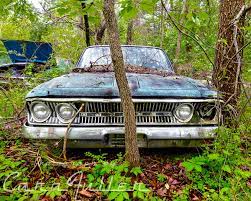
I had just moved a logger onto the tract when the owner drove up.  He was an old man dressed in old man work clothes:  khaki pants, matching khaki shirt, red and black plaid hunting jacket, and a cap with ear flaps.  Looked like he might have just stepped off the cover of a 1957 edition of Outdoor Life.  His car was also from the ’50’s, a Rambler I believe, and it was as neat as the creases on those khaki pants.  I initially thought “bless his heart, this poor fellow has come today because this land is dear to him.  He probably inherited it from his father, who managed to scrape up enough share-cropper dollars to buy it just before the Great Depression.  Now he wants to take a last look at the trees he and his poor old daddy planted together right after he got home from the Big War across pond.”

I would later discover that he owned a couple of thousand acres of land and had more money than Carter had little pills (Google it, youngsters).  I have more imagination than sense sometimes.

He motioned me over to the passenger window.  “Hop in, young fellow, I want to show you some things before you get started.”

Now at this point in the story I should mention that there was a chihuahua in the back seat of the Rambler, who looked to be about as old as the man (in dog years, of course).  I should also mention that he was in a rage, barking and snarling and flinging himself against the rear passenger window.

I am not a person who has any fear of dogs.  But I do have a healthy respect for a snarling one with a murderous look in his bugged-out eyes, even if he does weigh 15 pounds and barks with a Mexican accent.

I hesitated.  “Is your dog going to bite me?”

“No, son, get in.  Jasper, hush that up now, you hear.”

Jasper was apparently bilingual, as he did calm down slightly.  But as soon as I got in he jumped to the top of the front seat, where he hunkered-down facing me.

We rode around in that Rambler for twenty minutes as the old man pointed to this and that.  We bounced down roads and pig-trails that I wouldn’t have attempted in a four-wheel drive pickup.

I said “Yes sir” a lot, but my eyes were straight ahead and I was trying not to flinch.  That chihuahua’s nose was one-inch from my cheek, and he was growling the entire time — one of those breathing, inhale/exhale growls.  I knew if I made one move my left ear was gone.  I was focused.

We eventually made it back, my face still intact.

The next day I called the logger to see how things were going.  “This is some good wood” (more forestry parlance), “but I’m afraid we’re going to accidentally kill that old man.  He stays out here all the time watching us work.  We’ve had several close calls.  He just appears out of thin air beside the machines.  I almost cut a tree down on him this morning.”

I promised I would come by the next morning and talk to him about the dangers of logging equipment.  Make sure he understood.

Let me digress again and tell you a little about this logger.  Tony had found Jesus at a Pentecostal tent revival a couple of months before, and he was as excited and sincere about his new-found faith as any man I had ever met.  Within a week, his entire crew had joined the flock as a result of his preaching.  Tony had invited me to his church, the “West Georgia Assembly of Signs Following,” where the Spirit was working.  People were speaking in unknown tongues, being healed of various afflictions, and sometimes were “Slain in the Spirit.”  No timber rattlers were being passed around, so I guess all the signs following were not yet on display.*

Once Tony asked me if I had ever been Slain in the Spirit.

I said I didn’t think I had.

“Well, you ought to come to one of our Saturday night services.  It happened to me a couple of weeks ago.  It was like being hit by a bolt of lightning.  Knocked me slam out of my shoes.”

I smiled and nodded.  Didn’t say anything.  Never had any desire to be struck by lightning.  Try to avoid it most days.

Back to the story.  The next day I came out to talk to the old man, but he was nowhere to be found.

I stopped Tony and asked if he had been out to the job that morning.

“Oh yes, he left about an hour ago.  I asked him if he knew Jesus, and he said ‘No, I don’t want any part of religion,’ so I radioed all my men and got them to come in.  We formed a circle around him and prayed for his eyes to be opened by the Spirit, but he just jumped in his car and left.”

Funny thing, we never saw that old man again.

Probably just afraid of lightning.


* The Bible, Mark 16:17-18.

This piece first posted in 2016.

The Good Life

for Molly

garden

If you live long enough you gain an appreciation for those who came before you.

When COVID-19 hit and everyone was advised to practice “social distancing,” I was indifferent. “Social distancing?” I invented it. Been practicing it for years.

Then came “shelter in place” and “work from home.”

Unlike most, I could not have been happier. Stay home? Well “please don’t throw me in the briar patch Br’er Fox.”  I packed my possibles and headed to our farm.

I take liberties with the word “farm.”  Not the image the word conjures. Really just woods and a few open acres. The crops are trees and wildlife, not corn and livestock.

Finally, a chance for the good life. The life of my ancestors. A life for which I was surely born.

Now to be clear, I do not have an upper-class pedigree. I did the research. My kin were Irish immigrants and poor white sharecroppers. No royal sap in the family tree. Mostly poor folks who eked out a living with whatever they had on hand.

But I had more.  The pandemic did not take me by surprise. The farmhouse was fully stocked before the initial panic hit. While many rushed to the stores, I just sat back and watched from a distance. I am, after all, a smart man (just ask the Redhead and she will tell you “oh yes, he certainly thinks he’s a smart man”). I am forward-looking. A visionary even. I was never a Boy Scout, but I lived their motto — “Be prepared.”

I had food. I had medicine. I had gas and diesel. Masks, antibacterial wipes, and toilet paper to spare.

I might have even had a gun or two.

I also had creeks for water, trees for firewood, and wild animals for meat.

But most importantly of all, I had seeds for a garden.

I was dug-in like an Alabama tick. Ready for the long haul.

The first three weeks were blissful. I was finally able to get my work done. Almost no calls, no emails, and no visits from anyone to break my chain of thought.

My plan was executed to perfection. I put in my office hours, then headed outside to take leisurely walks and tend my tomato plants.

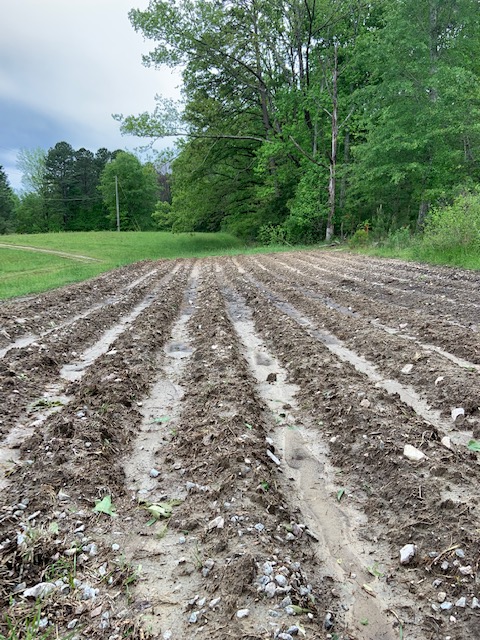
On a gorgeous Saturday morning I climbed aboard the big John Deere and plowed and planted my garden. It was the same kind of worn-out rocky ground that my ancestors plowed with mules, but no matter.  I could coax that sorry dirt to yield more than they ever dared to dream.

Then came Sunday morning. The storms hit at sunrise. Hail. High winds. Rain by the bucket-load. The lights flickered, then went out.

No worries. I had candles and flashlights with extra batteries. Who needs television or the internet? I had shelves of good books and plenty of paper and pens with which to write.

Paradise.

That night I laid down in sweet solitude. The bedroom windows were open, and the light breeze and the dripping rain the only sounds. My sleep was deep and filled with contented, peaceful dreams.

Monday morning, I decided to take a stroll to survey my kingdom.

Trees down. Trails blocked.  Garden mostly washed away. Creeks out of the banks. Dead battery on the Deere.

Rugged independence? Gone.

That night I blew out the candles and lay in the darkness again. You know you really cannot appreciate true darkness until you are way back in the woods with no lights on a cloudy night. I struggled to find sleep with my troubled thoughts.

As my mind raced through the stillness of that long night it finally hit me. There was nothing romantic about the way my ancestors lived. They could not run to the grocery store when the crops washed away. No cash to buy more seed or supplies or even pay back their shares. No hiding from a pandemic. If the Spanish flu did not kill their children, then cholera just might.

I understand them now. Why they left the “good life” for jobs in the cotton mill towns. Why they traded idyllic farm living for a hot, dusty job where a man might lose a hand in a second or his lungs to the lint in a matter of a few years.

I have no worries. I can start again. I have the means to replant the garden, and the grocery store is only five miles away. I still have my masks and wipes, so I will probably stay untouched by the virus, at least for a while.

I added something to my supplies. Respect for my ancestors.

The “good life” is all high cotton and buttermilk cornbread when you are playing a role in the theater of your mind.  But when you live off the land to survive it is not all it is cracked-up to be.

Life from the Porch

porch

“This is Catherine Hinds.  Buddy wanted me to call and let you know that he seen a turkey this morning come out across the road from our house, a gobbler, and he went back in the woods going toward your place.  He wanted me to call and tell you.  Seen his beard hanging down.  I thought I’d call and tell you.  This is Catherine Hines and my phone number is XXX-XXX-XXXX.  It’s uh…What time is it?  It’s 12:03, is what time it is.  Thought I’d call and tell you.  Bye.”

This was on my voicemail last Friday.

Catherine and Buddy are my neighbors.  The live in the next to the last house before the last house on a rutted-up red clay road.

She is 89, he 92.  They are porch-sitters.  Neither can hear well, but there is absolutely nothing wrong with their eyesight.  Nothing comes down that road without notice.

Needless-to-say, I don’t have a security system.  Be a waste of good money.

The last time I stopped and visited (which was way too long ago), we all sat on the porch and talked turkey.  Mostly the lack thereof.  I bemoaned the fact that the wild turkey had disappeared in the last couple of years.  Every Fall for 20 years I watched droves of hens pass through green fields and oak flats as I waited for a glimpse of a deer.  Every Spring, gobbling like thunder on ridges all around.  Now I can’t even find a track.  Buddy, who has lived on this same plot of ground his entire life (except for the War, of course), was just as perplexed.

Thus, the reason for the voicemail — turkey sighting.

The Redhead and I stopped and visited the next day to thank Ms. Catherine for the call.  The ladies chatted while Buddy and I hashed-out our theories about the mysterious turkey decline.

The conversation soon turned to the community.

Catherine said we have new neighbors in the next house back up the road.  They keep to themselves.  Looks like they’re going to be good neighbors.

Wednesday is her “go to town” day.  The grocery store is a good one.  It used to be a Food Town.  Now it’s Renfroe’s, but she said she still calls it Food Town because that was the name for so many years.  She knows everybody that works there by name and they know her too.  It’s not a big store, but they have everything you need.  Meat’s good too.

Buddy said the timber on the Nelson place just up the road was recently cut.  Billy Dennis cut it. Buddy knew his daddy.  He was a fine man.  Lived about three miles up the road.  Died about ten years ago.  The lady who owns that land now lives up north somewhere.  She was a Boone, you know, before she got married.  This country used to be just slam eat-up with Boones.  She stopped last time she was down.  Wanted some red berries off that bush out back.  Told her that she could have the whole damn thing if she wanted to dig it up.  Her land, now, they sure skinned that place, but Billy said they were going to set it back out or seed it with pines or however they do that stuff next Winter.  He couldn’t remember it looking so “clean” since they used to farm it.

This goes on without pause the next thirty minutes, a seemingly random conversation, but really a chain of thoughts, each link leading to the next topic, all within a few miles from the house.

We eventually excuse ourselves.  Our dogs are in the truck and we need to “get on down the road.”

Buddy said what he always does.  “You’ll stop again next time you pass.”

We have to pass to get to our house.

I tell the Redhead that Buddy and Catherine have a better life than us.

She doesn’t understand my thinking, can’t see how I could believe such a thing.  Just two old folks living in a little house on the same plot of ground for the last sixty years.

I see it differently.  No computer.  No cellphone.  No Facebook, Twitter, Instagram, Pinterest.  No Fox, CNN, MSNBC.  No Left, Right, Center.  No Trump, Peolsi, Biden, Bernie.  No Venezuela, China, North Korea.  Not much interest in the workings of the world more than a few miles from home.

Really not much interest in anything that can’t be seen from the porch.

All they have is each other.  It’s their world, and that suits them just fine.

I think that’s about as good as life can get.