If we look at the history of change in Alabama’s forest, it is useful to think in terms of “eras.” Each era lasted about 80 years. I have covered two of these in previous posts: “the original forest” as described by naturalist William Bartram, and the “settlement era” in which European settlers purchased land and created homestead farms. The next period, which I call the “sawmill era” (1865-1940), had the largest influence on the structure and composition of the forests across the South. The current Alabama forest still reflects what occurred in that era.
Alabama’s landscape at the beginning of the Civil War (1861-1865) was still largely an unbroken patchwork of farms and forest. There were some small sawmills (often called “peckerwood mills”) usually located along creeks and rivers, but they were incapable of processing significant volumes of lumber. Plus, the lack of a transportation infrastructure relegated timber and forest products primarily to local use. Consequently, nothing resembling a large-scale timber industry in the South existed before the Civil War.
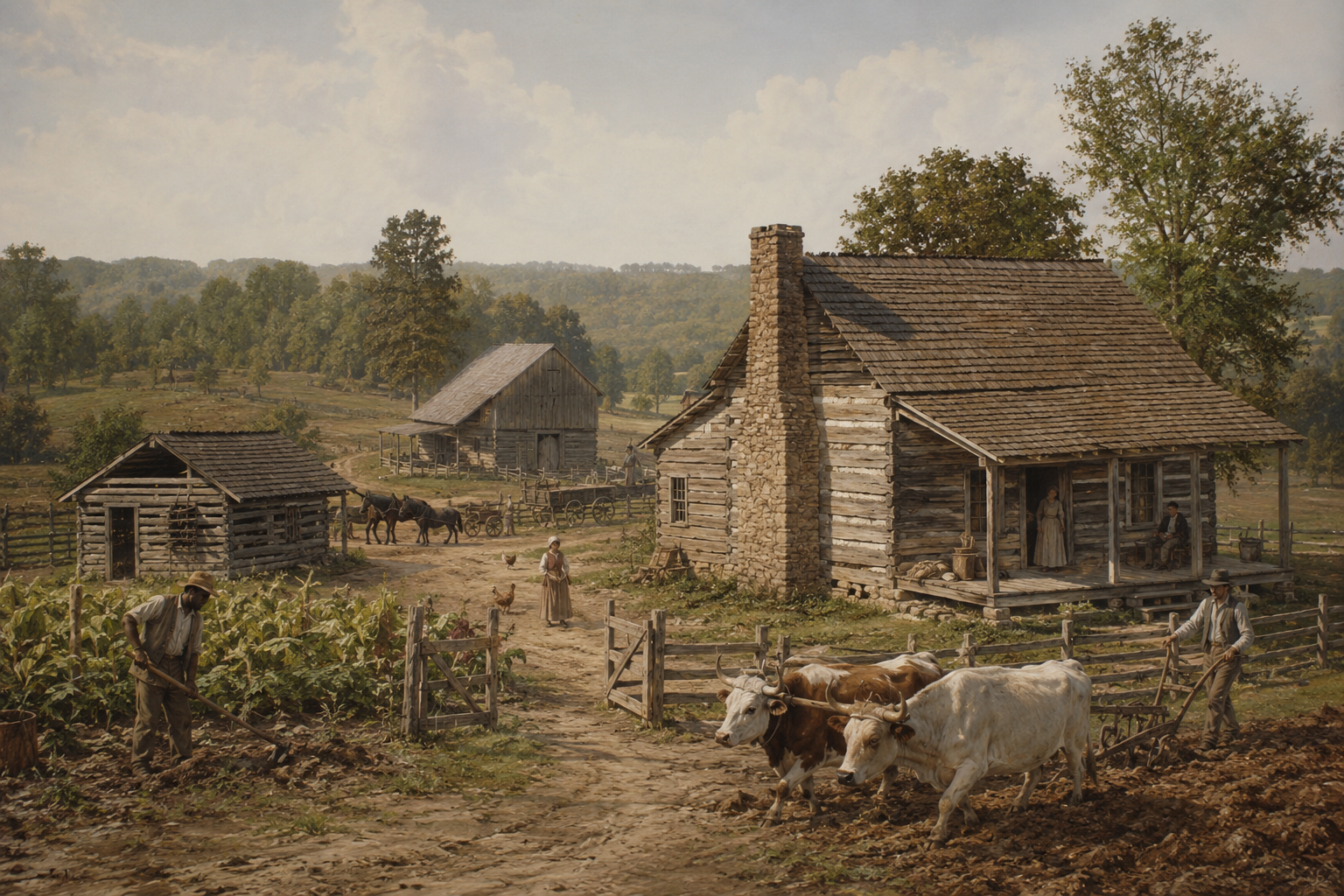
At the time, Alabama was an agrarian society consisting of hundreds of small farms and large-acreage cotton plantations. There was some manufacturing across the state, but nothing on the scale of what existed in the North. While we may think the farmers were “dirt poor,” the South had a higher per capita income, even including the slave population, than the industrialized states of the Union. The War changed that as plantation owners and subsistence farmers (supplying most of the soldiers) went from wealth to poverty overnight. Contrast this to the northern states where a well-developed forest products industry supplied lumber, railroad crossties, charcoal, and tannin. Large scale “lumbering” had already occurred over the previous eight decades, particularly in the Lake States. Vast areas of forestland already showed signs of depletion. The combination of an impoverished South, rich in forest, and the industrialized North, rich in capital, was a perfect match.
In his book “How to Get Rich in the South,” A.J. Harrison wrote “The supply of timber in the South is inexhaustible . . . and is being bought in large tracts by lumbermen.”
Inexhaustible.
Wealthy northerner capitalists saw opportunity in Alabama’s stately longleaf pine trees. The northern states needed timber to supply an industrial revolution, and wealthy northern capitalists had a vision and the means to exploit it.
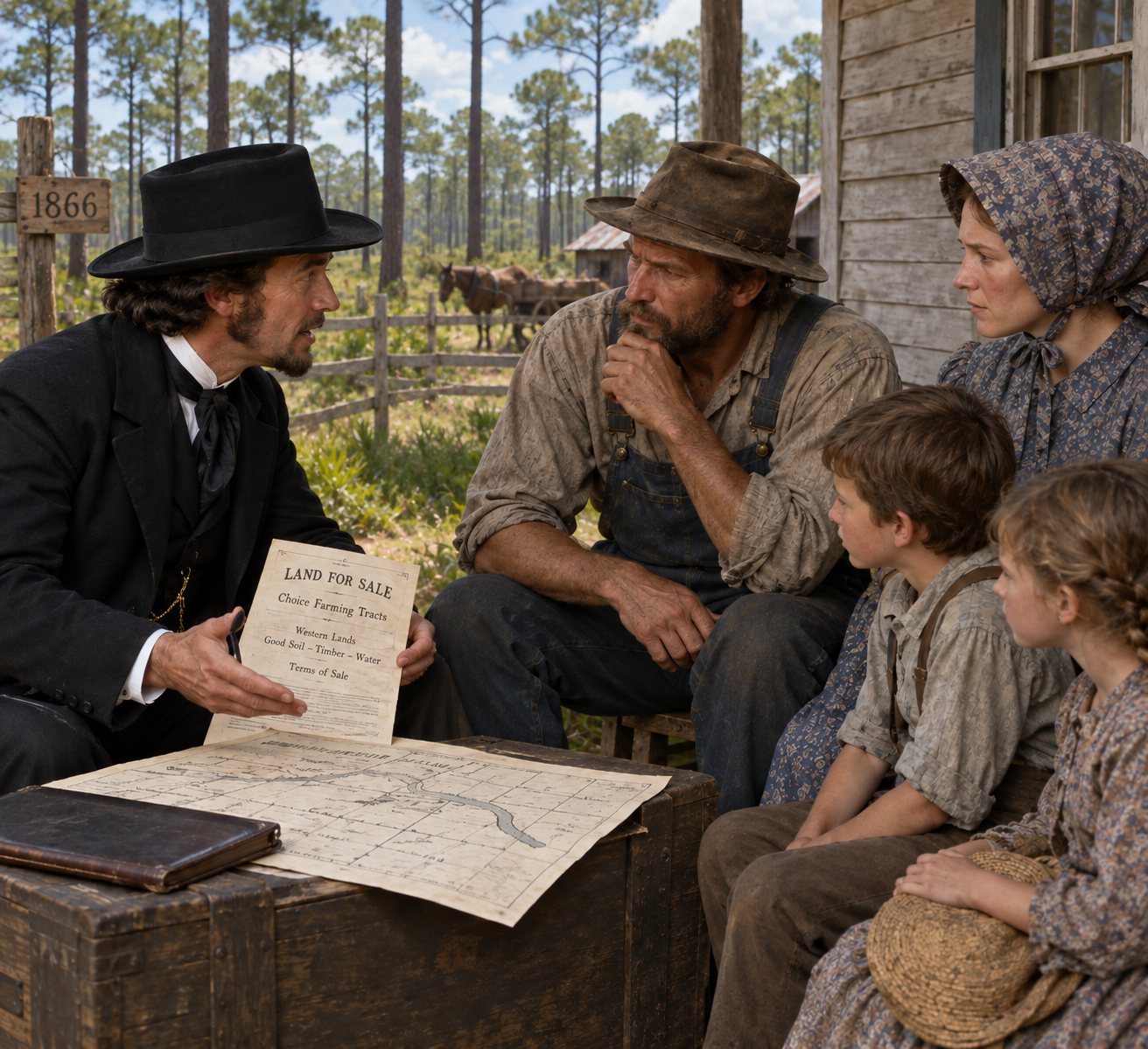
And so, it was. Thousands of acres were bought by “timber barons” from the North. Some were simply speculators, while others would build sawmills mills along the expanded railroad corridors. Homesteaders, now desperate for cash in an economy in ruins, had two options: sell the land and go West, or stay put and sell their trees for whatever they could get.
They did both. Those who sold their land often did so at less than one dollar per acre. Those who chose to stay and keep their farms sold their trees for much less. One example was in the heart of Alabama’s extensive longleaf forest, where records reveal that one timber speculator bought 40-acre parcels of “virgin” longleaf timber for “three sacks of corn, three sides of bacon, ten pounds of tobacco, and 40 pounds of coffee.” If he considered the timber “exceptional” he offered “an extra sack of corn and an additional ten pounds of coffee.”
Once the land and timber was purchased, sawmills were constructed along the railroad corridors. In the next installment, I’ll discuss the particulars and the result: deforestation, the likes of which will never be equaled.


You must be logged in to post a comment.